The Origin of a Demon Cyborg
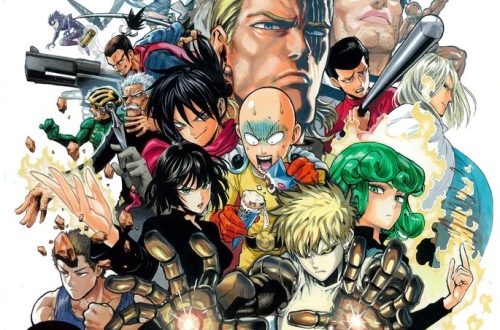
The world of anime features many memorable characters. However, few are as visually striking as genos one punch man. He serves as the deuteragonist in the popular series. His journey begins with a tragic backstory. A mad cyborg destroyed his hometown and family. Consequently, he agreed to become a cyborg himself. Dr. Kuseno performed this transformation. The doctor sought revenge against the same mad cyborg. Therefore, their goals aligned perfectly. Genos dedicates his life to finding this enemy. His design immediately tells a story of tragedy and power. Furthermore, his appearance contrasts sharply with the protagonist, Saitama. Saitama represents simplicity and limitless strength.
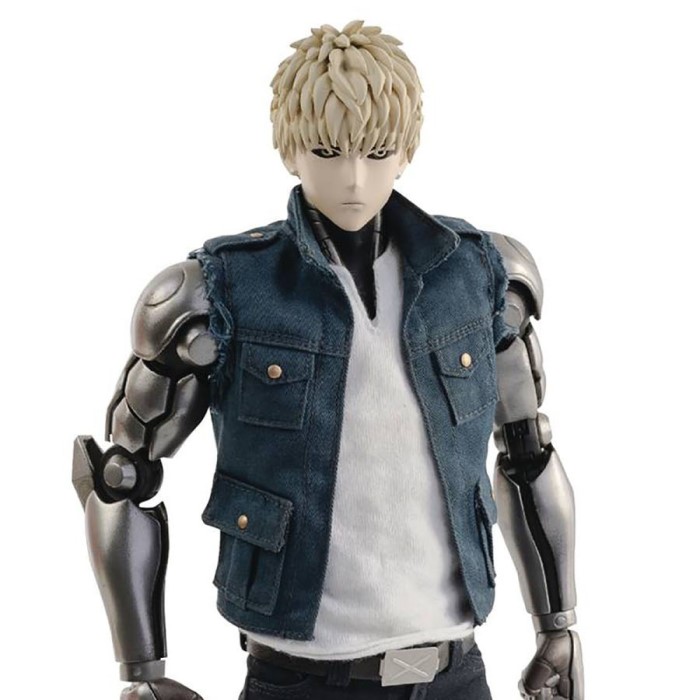
In contrast, Genos represents complexity and technical precision. This visual balance is crucial for the series. Fans instantly recognize his silhouette. The character stands out in the Hero Association. He is an S-Class hero, ranked 14. Additionally, he is known as the Demon Cyborg. This nickname reflects his destructive capabilities. He is a serious and diligent hero. He often overanalyzes simple situations. This trait provides comic relief. Thus, his origin sets the stage for a fascinating design evolution. He is not just a robot. He is a human soul in a weaponized shell.
The Core Design Philosophy
Yusuke Murata is the artist behind the manga. He created a distinct look for Genos. The design philosophy focuses on “realistic sci-fi.” Consequently, Genos does not look like a typical robot. He looks like a human modified with industrial parts. This approach makes him unique. Furthermore, the design emphasizes functionality. Every panel on his body serves a purpose. For example, his arms contain hidden weapons. His chest houses a core reactor. This core is his source of power. Additionally, the artist focuses on texture.
Genos has a mix of metallic and synthetic skin. This contrast creates visual interest. Therefore, the reader can almost feel the metal. The design also incorporates elements of fashion. He often wears normal clothes. This reminds the audience of his humanity. However, his combat mode reveals his true nature. The transition is seamless and exciting. Murata aimed for a “cool” aesthetic. He succeeded in creating an iconic look. Thus, the design philosophy blends practicality with style. It is a masterclass in character conceptualization.
Detailed Mechanical Aesthetics
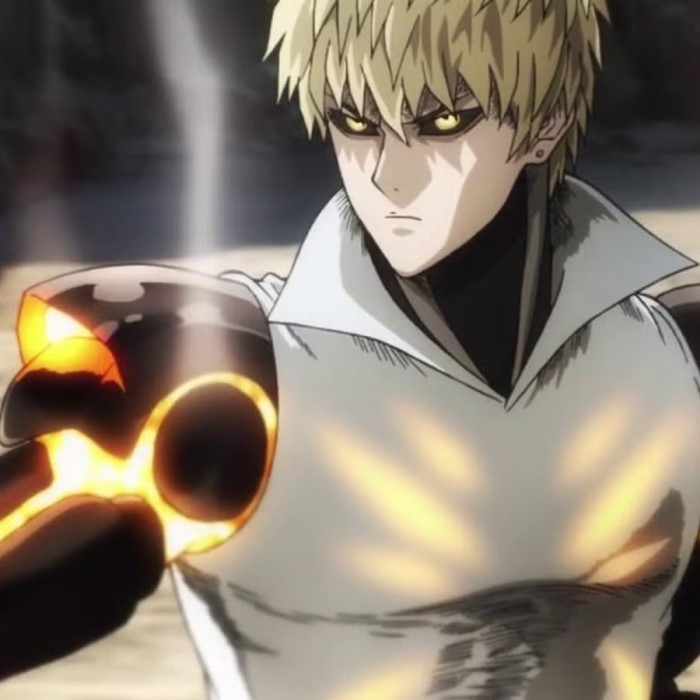
The mechanical details of genos one punch man are astounding. Murata draws inspiration from real-world machinery. You can see pistons, gears, and cables. These elements are drawn with high precision. Consequently, the character feels heavy and real. His face is incredibly expressive. Yet, it is clearly artificial. He has seam lines on his face. These lines indicate his modular construction. Furthermore, his eyes are mechanical sensors. They glow when he activates his powers. This feature adds to his intense demeanor.
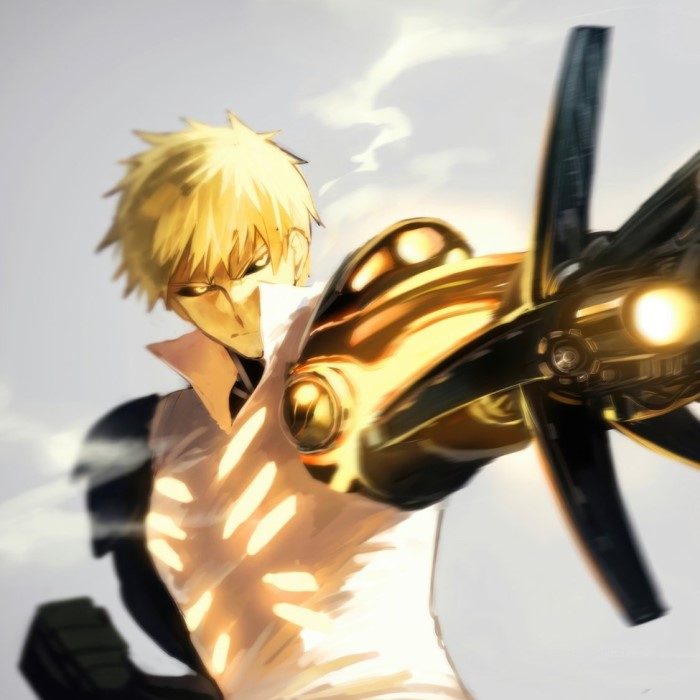
His hair is another key feature. It is often messy and blond. This contrasts with his sleek, black metal body. Therefore, the hair adds a touch of wildness. It reminds us he was once a normal boy. Additionally, his body is not static. It changes based on damage and upgrades. He often loses limbs in battle. The internal workings are exposed during these moments. We see complex hydraulics and wiring. This level of detail is rare in manga. It sets a high standard for the medium. The mechanical aesthetics are not just for show. They represent his identity as a living weapon.
The Evolution of Genos Upgrades
Genos is a character defined by change. He constantly seeks to become stronger. Dr. Kuseno provides him with regular genos upgrades. Each upgrade alters his design slightly. Consequently, his appearance evolves throughout the series. Initially, he had a simpler frame. It was sleek but less armored. As he faced stronger enemies, he needed more power. Therefore, his body became bulkier. He gained the “G4” upgrade after a fierce battle. This version was more angular and sharp. It featured enhanced speed and perception.
Furthermore, the “Monster Association Arc” brought new changes. He needed to fight dragons and monsters. His design became more monstrous himself. He gained a more muscular torso. His face plates became more pronounced. Thus, the visual timeline of Genos is a history of war. Each scratch and dent tells a story. Each new part reflects a past defeat. He is a walking archive of his battles. The upgrades also keep the character fresh. Readers look forward to his new look. It creates anticipation for the manga chapters. This evolution is a key part of his appeal.
The Art of Incineration Cannons
Genos is famous for his firepower. His signature move is the Incineration Cannon. This attack is a visual spectacle. Murata draws it with intense energy. Consequently, the pages seem to glow. The cannons are located in his palms. They open up to reveal a glowing core. Furthermore, the heat distorts the air around him. This effect creates a sense of immense temperature. The artwork uses deep blacks and bright whites. This contrast emphasizes the destructive power. Therefore, the reader feels the impact.
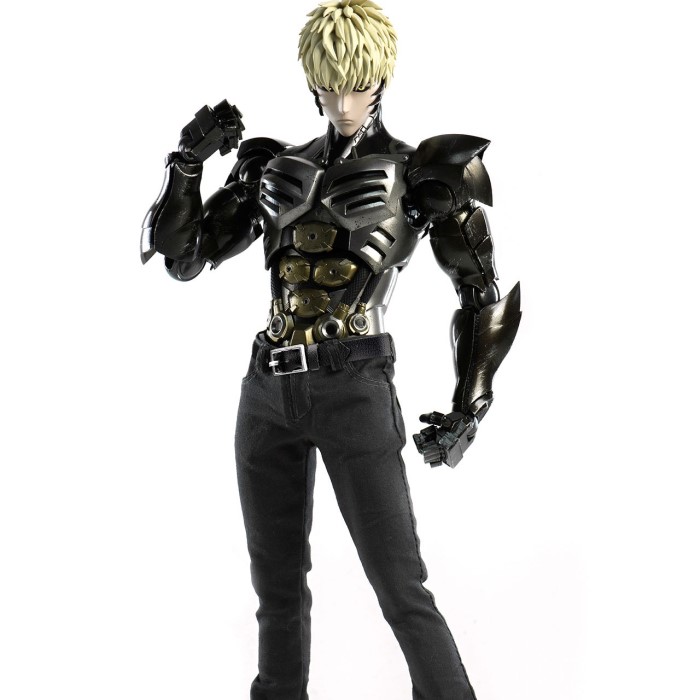
The sound effects are also integrated into the art. They follow the shape of the blast. Additionally, the cannons have different modes. He can fire a wide beam or a concentrated shot. The design of his hands changes for each mode. His fingers might retract or expand. This attention to detail is impressive. It shows the artist thought about the mechanics. The art makes the technology believable. Thus, the Incineration Cannon is not just a weapon. It is a centerpiece of his visual identity. It defines his combat style.
Contrasting Saitama and Genos
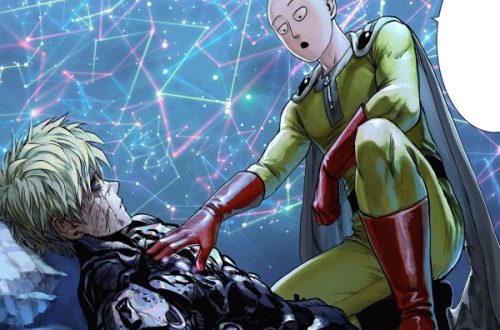
The visual relationship between the two leads is vital. Saitama is drawn with simple lines. He has a round head and simple eyes. In contrast, Genos is a mass of complex lines. He has sharp angles and intricate details. Consequently, they are visually opposite. This contrast highlights their different philosophies. Saitama is effortless power. Genos is effort and calculation. Furthermore, this difference is often a joke. Genos looks like the main character of a shonen anime. Saitama looks like a background character.
Therefore, the subversion of expectations is immediate. When they stand together, the art balances itself. The simplicity of Saitama makes Genos look cooler. The complexity of Genos makes Saitama look funnier. Additionally, their color palettes contrast. Genos is black and gold. Saitama is yellow and red. These colors are complementary. They look good together in merchandise. Thus, the design of Genos serves to elevate Saitama. And Saitama’s design elevates Genos. They are two halves of a perfect whole. The art succeeds because of this duality.
Facial Expressions and Humanity
Despite being a cyborg, Genos is very human. The art captures his emotions perfectly. He often looks serious and intense. His brow is usually furrowed. Consequently, he seems perpetually angry. However, he also shows confusion and shock. His mechanical eyes widen comically. This happens often when dealing with Saitama. Furthermore, the artist uses his face plates effectively. They can shift to show emotion. A slight tilt of his head changes his mood. Therefore, the art does not rely on his mouth.
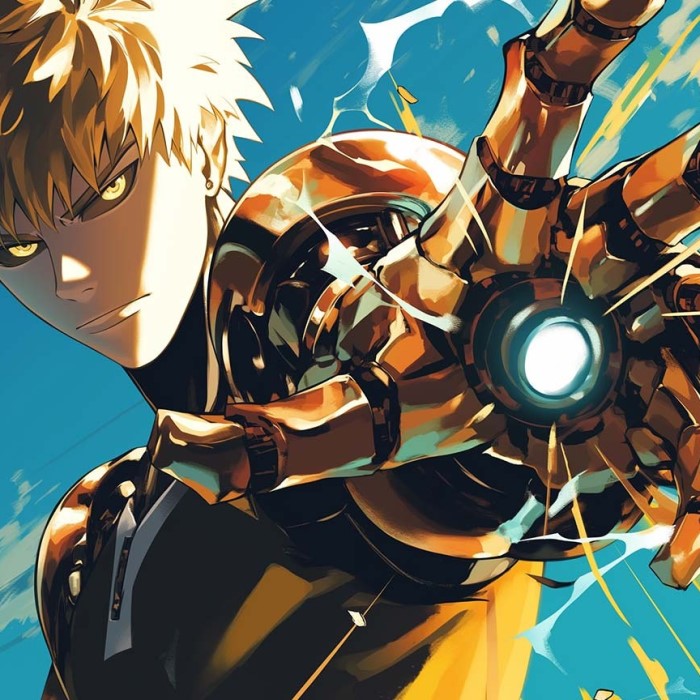
His eyes convey the most feeling. Additionally, his “serious” face is iconic. It represents his dedication to justice. But his “shocked” face is equally memorable. These moments break his stoic character. They make him lovable to the audience. We see a teenager trying his best. We see a disciple learning from a master. Thus, the facial art bridges the gap between man and machine. It reminds us that a human soul remains inside. The tragedy of his loss is always present in his eyes. But so is his determination. This emotional depth is a testament to the art.
Impact on Anime and Pop Culture
The design of genos one punch man has left a mark. It has influenced other cyborg characters. The “bionic pretty boy” trope has gained popularity. Furthermore, his look is perfect for cosplay. The distinct armor plates are recognizable. Many fans create impressive replicas. Consequently, he is a staple at conventions. His figure sales are also very high. The detailed design translates well to 3D models. Therefore, toy companies love producing merchandise. The vibrant colors and sharp lines look great on shelves.
Additionally, the anime adaptation enhanced his design. The sound of his voice and the movement of his parts added depth. The glowing effects in the anime are stunning. Thus, the character transcends the manga page. He has become an icon of modern anime design. The blend of beauty and brutality is his signature. He represents the pinnacle of mechanical design in the genre. Fans will continue to admire his aesthetic for years. It is a timeless design that stands out.
FAQ
Is Genos a villain or hero?
Genos is a hero. He holds the rank of S-Class in the Hero Association. He fights to protect humanity and destroy evil. However, his intense demeanor often scares civilians. He is dedicated to justice.
Who kills Genos in One Punch Man?
Genos dies or gets destroyed multiple times. He is often defeated by powerful monsters like the Deep Sea King or Garou. In the webcomic, Garou destroys him during their final battle. However, Dr. Kuseno always repairs him.
Does Genos get revived?
Yes, Genos is effectively revived through repairs. Since he is a cyborg, his body can be rebuilt. Dr. Kuseno fixes him after every major defeat. His brain and core usually survive the damage.
Is Genos a boy or girl?
Genos is a boy. He was born a human male. He retains his male identity after becoming a cyborg.
Conclusion
In summary, the art of genos one punch man is a masterpiece. It combines mechanical complexity with human emotion. We have explored his origin and design philosophy. Furthermore, we looked at his upgrades and weapons. The contrast with Saitama defines his visual role. His expressions remind us of his humanity. Thus, Genos is more than a sidekick. He is a work of art. The character continues to evolve. Fans eagerly await his next transformation.