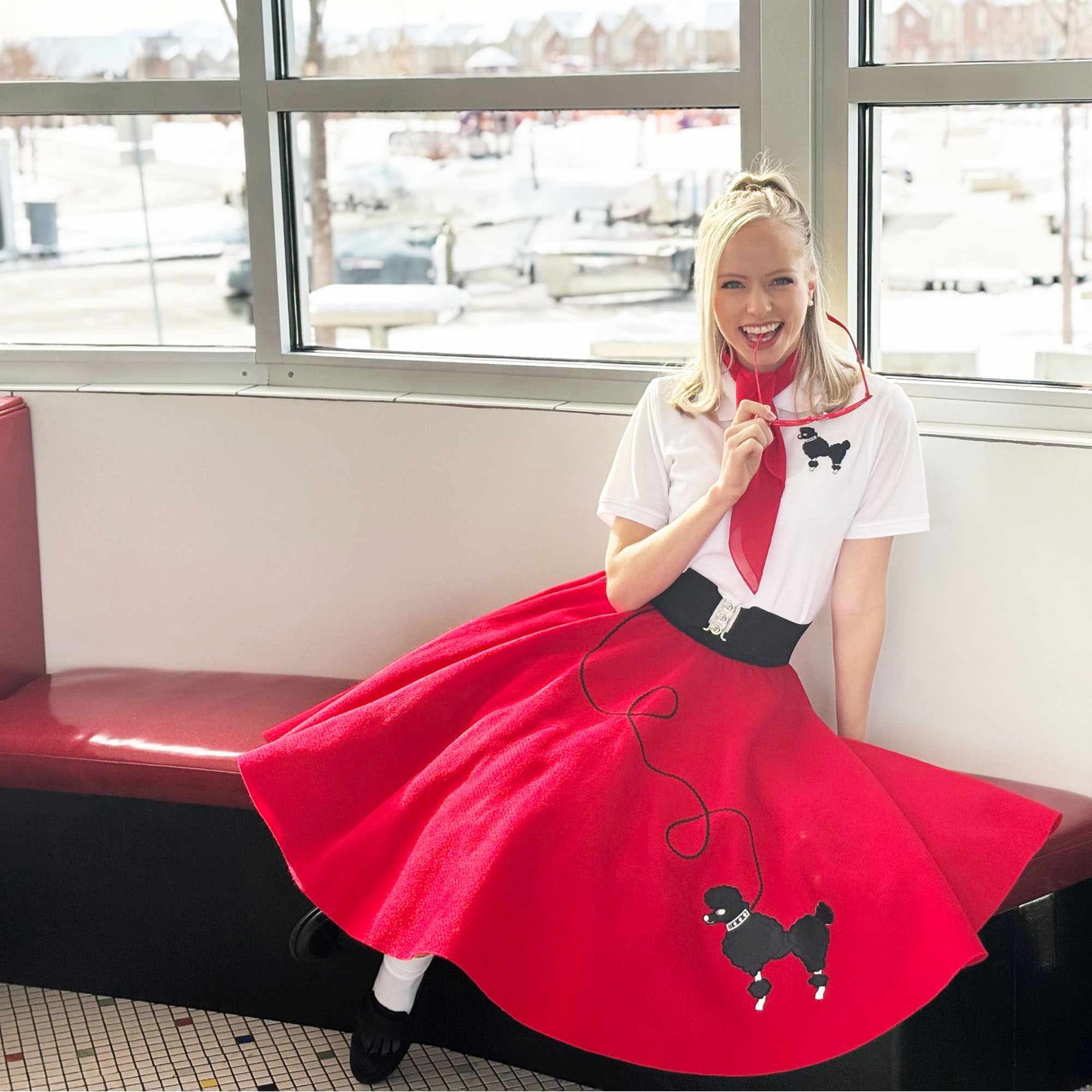
The 50’s poodle skirt era marked a vibrant shift in American fashion and youth culture. It emerged during the post-war 1950s, a time when teenagers began to assert their own identity through clothing, music, and dance. At the center of this transformation stood the poodle skirt—a bold, playful garment that symbolized freedom and fun. Girls across the country embraced its whimsical design and comfortable fit.
Moreover, the 50’s poodle skirt era reflected broader social changes. Women were stepping into new roles, yet still celebrated femininity in creative ways. The skirt became more than just an outfit—it was a statement. Schools, sock hops, and drive-ins buzzed with teens wearing these skirts while dancing to rock ‘n’ roll. Therefore, fashion and lifestyle evolved hand in hand. As a result, the decade left a lasting imprint on how we view youth expression today.
 Rise of Youth Fashion in Post-War America
How Teen Culture Shaped Clothing Trends
After World War II, economic growth gave families more disposable income. Parents could afford to buy clothes specifically for their children. Consequently, teenagers gained financial independence and began influencing market trends. They no longer dressed like miniature adults. Instead, they sought styles that matched their energetic lifestyles.
Additionally, high schools became social hubs where fashion mattered. Students wanted to stand out while also fitting in. This balance fueled demand for unique yet wearable designs. Then came the rise of teen magazines and advertisements targeting young consumers. These media outlets promoted new looks constantly. As a direct result, fashion cycles sped up significantly. Retailers responded by producing affordable, trend-driven clothing. The 50’s poodle skirt era thrived in this environment. Young women mixed skirts with saddle shoes and bobby socks for complete outfits. Thus, personal style became a daily ritual.
Iconic Design Elements of the Poodle Skirt
What Made the Skirt So Distinctive
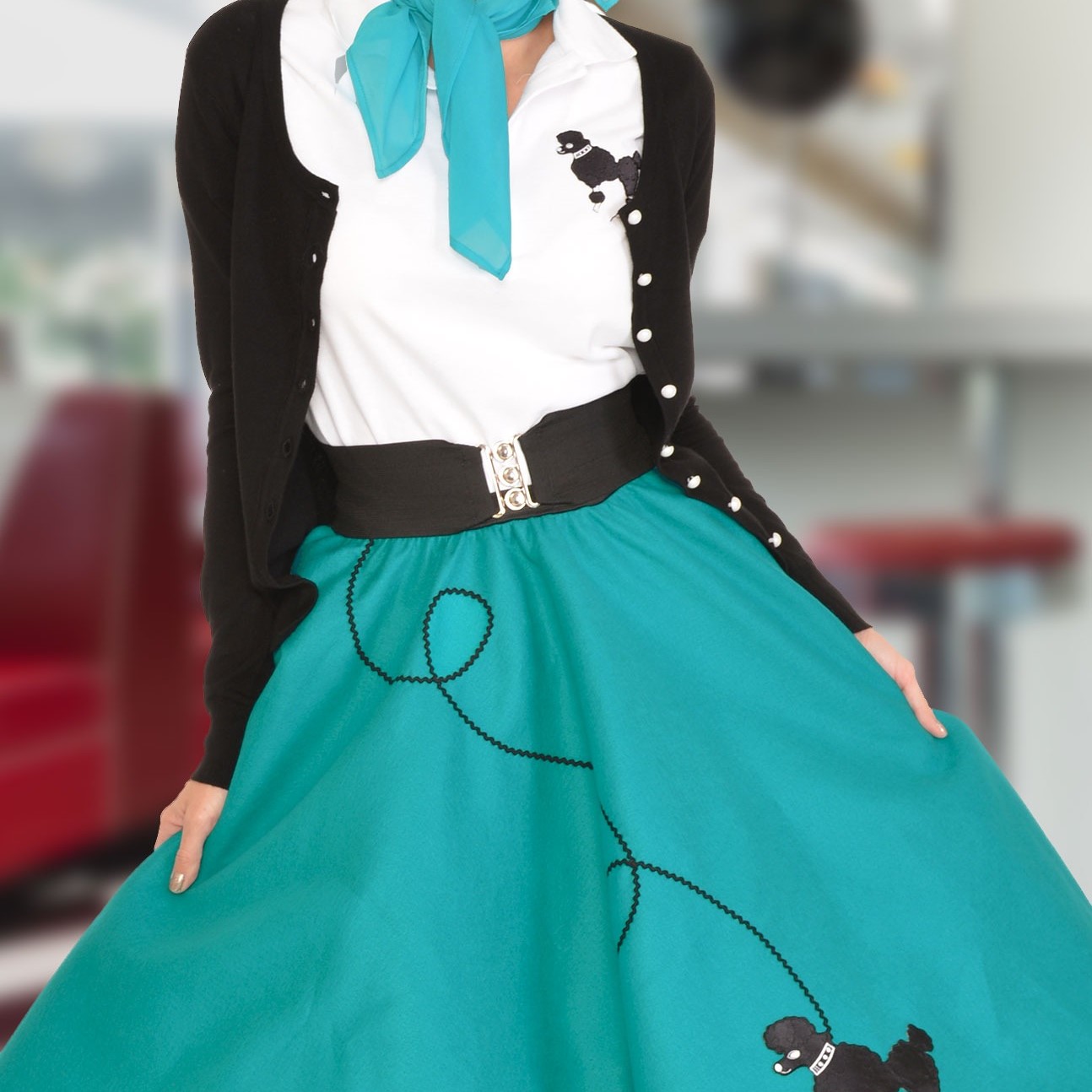
The poodle skirt featured a wide circle cut that flared outward when spun. Its full shape allowed for dramatic movement during dances like the jitterbug. Most versions reached mid-calf length, offering modesty without sacrificing flair. A fitted waistband ensured a snug but comfortable fit around the hips.
Furthermore, designers often decorated the front with elaborate appliqués. Poodles were the most popular motif—usually embroidered or sewn on in felt. Some included rhinestones for added sparkle. Other themes appeared too, such as flamingos, hot rods, or school initials. Customization made each skirt feel personal. Girls took pride in choosing designs that reflected their interests. Meanwhile, the fabric was typically lightweight cotton or wool. This kept wearers cool during long hours of dancing. Overall, creativity and charm defined every detail. Hence, the poodle skirt stood out in any crowd.
 Cultural Significance of the 50’s Poodle Skirt Era
More Than Just a Piece of Clothing
During the 50’s poodle skirt era, fashion served as a form of self-expression for teenage girls. It arrived at a time when societal expectations limited women’s roles. Yet, through clothing, young women claimed space and visibility. Wearing a poodle skirt signaled confidence and individuality.
Also, the skirt connected deeply with music and dance culture. Rock ‘n’ roll was rising fast, led by artists like Elvis Presley and Chuck Berry. Teens gathered at school gyms and community centers to dance the night away. The poodle skirt moved beautifully with every twist and turn. Its flow enhanced the joy of physical expression. In contrast, earlier generations rarely emphasized movement in fashion. But now, clothing had to keep up with active lives. Additionally, movies and TV shows highlighted this look. Actresses wore similar styles, making them aspirational. As a result, the poodle skirt became a cultural icon beyond mere function.
Influence of Music and Dance on Fashion
How Rock ‘n’ Roll Drove Style Choices
Rock ‘n’ roll didn’t just change music—it reshaped how people dressed. Energetic rhythms demanded flexible, dynamic clothing. The poodle skirt met this need perfectly. Its loose drape allowed unrestricted motion. Dancers could spin, jump, and kick without worry. Therefore, it quickly became standard attire at teen events.
Moreover, jukeboxes blared hits from Bill Haley & His Comets and Little Richard. These songs inspired wilder movements than previous genres. Swing and waltz gave way to freestyle shaking and twisting. As a result, traditional dresses seemed too restrictive. Parents sometimes disapproved, calling the music rebellious. Still, teens embraced it wholeheartedly. They paired skirts with ponytails and cat-eye glasses for full effect. Dance marathons and sock hops turned into fashion showcases. Each girl tried to outshine the others with original designs. Clearly, rhythm and style grew inseparable during the 50’s poodle skirt era.
 Gender Roles and Femininity in 1950s Fashion
Balancing Tradition and Modern Identity
The 1950s upheld strict gender norms, especially regarding appearance. Society expected women to be polite, nurturing, and well-dressed. Dresses and skirts dominated female wardrobes. However, the poodle skirt introduced a lighter, more spirited version of femininity. It maintained modesty while adding playfulness.
In addition, girls used fashion to navigate between expectation and autonomy. On one hand, they followed rules about grooming and etiquette. On the other, they expressed personality through accessories and patterns. The poodle skirt let them do both. It looked proper during class but transformed at parties. Spinning under gym lights turned it into a performance piece. Teachers might scold, but peers admired.
Meanwhile, boys adopted greaser styles with leather jackets and jeans. Their looks projected toughness and rebellion. Girls’ fashion, by comparison, radiated charm and energy. Neither side fully broke free from norms. Yet small acts of choice mattered. Choosing a poodle over a flamingo, or red over pink, became subtle declarations. Thus, even within limits, identity found room to grow.
Manufacturing and Commercialization of Poodle Skirts
From Homemade Creations to Mass Production
Initially, many poodle skirts were handmade at home. Mothers or skilled teens stitched them using simple patterns. Felt appliqués came from craft kits sold in department stores. DIY projects made customization easy and affordable. Families enjoyed working on them together.
However, demand soon outpaced homemade supply. Department stores noticed the trend and began stocking ready-to-wear versions. Brands like Sears and Montgomery Ward offered multiple designs. Prices stayed low, making skirts accessible to most teens. Factories used efficient cutting and sewing methods to meet volume needs.
As production scaled, variety increased. Customers could choose different colors, lengths, and motifs. Some companies even licensed cartoon characters. Others added matching tops or slipcovers. While mass-produced skirts lacked uniqueness, they spread the style nationwide. Urban and rural teens alike wore them. Mail-order catalogs brought options to remote areas. In short, commercialization turned a niche item into a national phenomenon. The 50’s poodle skirt era reached its peak through both craftsmanship and industry.
 Legacy and Revival in Modern Times
Why the Look Never Truly Disappeared
Though the original 50’s poodle skirt era faded by the 1960s, its influence endured. Later decades revisited the style during nostalgia waves. The 1970s saw retro-themed parties where guests wore vintage-inspired outfits. Similarly, 1980s pop culture referenced 1950s aesthetics in films like Grease.
Moreover, modern fashion designers occasionally reintroduce poodle-like elements. Runway collections have featured circle skirts with bold front graphics. Indie brands sell updated versions with eco-friendly fabrics. Cosplayers use them for character accuracy in period dramas. School plays and musicals keep the look alive on stage.
Additionally, vintage fairs and online marketplaces offer authentic pieces. Collectors seek original 1950s skirts in good condition. Social media platforms showcase styled photos with hashtags like #vintagestyle. TikTok and Instagram videos demonstrate how to twirl gracefully. Dance instructors teach retro moves that highlight skirt motion. All these efforts ensure the spirit of the era continues. Even today, the poodle skirt evokes joy and imagination.
Frequently Asked Questions
What exactly defines the 50’s poodle skirt era?
The 50’s poodle skirt era refers to the mid-1950s period when poodle skirts became a dominant fashion trend among teenage girls. It coincided with the rise of rock ‘n’ roll, suburban culture, and youth consumerism. The skirt symbolized fun, innocence, and emerging independence.
Were all poodle skirts decorated with poodles?
No, not all featured poodles. While poodles were the most iconic image, many skirts displayed other motifs. Common alternatives included cats, hearts, musical notes, or school mascots. Custom designs made each piece unique.
Who invented the poodle skirt?
Julien’s Daughter, a boutique in Los Angeles, is often credited with creating the first version around 1947. However, it gained widespread popularity only in the early 1950s. Mass production helped it go viral.
Can you still buy poodle skirts today?
Yes, many retailers sell modern reproductions. Online shops offer vintage-style skirts for themed events. Crafters also share free patterns for DIY versions. Materials vary from cotton to polyester blends.
 Lasting Impact of the 50’s Poodle Skirt Era
A Symbol of Joyful Rebellion and Creative Expression
The 50’s poodle skirt era remains a powerful symbol of youthful energy and cultural change. It captured a moment when teenagers began shaping their own world. Through fashion, music, and dance, they built communities based on shared passions.
Even now, the image of a girl spinning in a poodle skirt brings smiles. It represents carefree days, first loves, and innocent fun. Yet beneath the surface, it also reflects deeper shifts in society. Young women used style to claim visibility and voice. They balanced tradition with innovation.
Today’s fashion continues to borrow from this golden age. Designers revisit silhouettes and themes regularly. Events like 1950s diner nights keep the aesthetic alive. Most importantly, the era reminds us that clothing can be both meaningful and joyful. Therefore, the legacy of the 50’s poodle skirt era will continue inspiring future generations.

